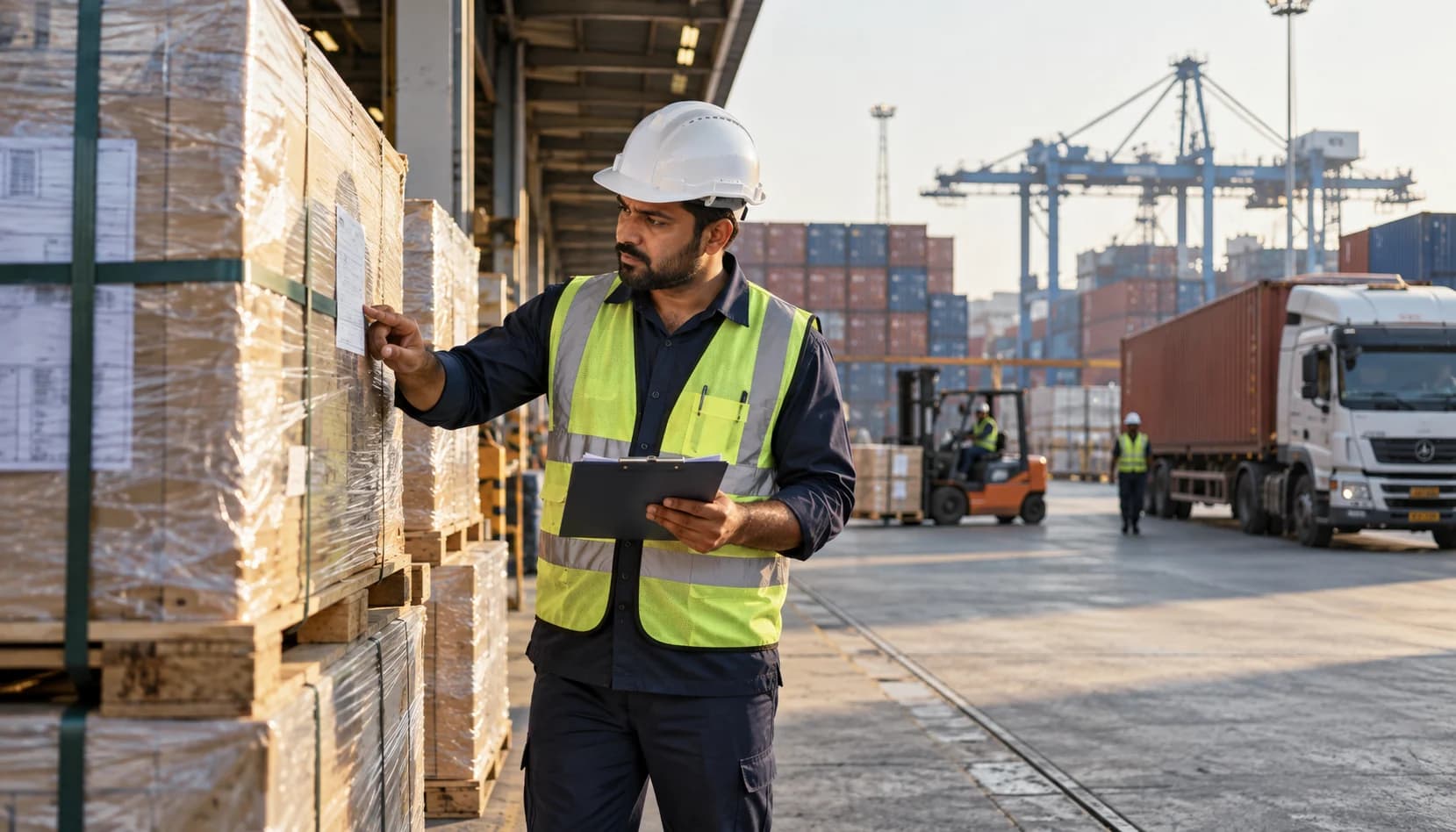
For businesses importing goods into India, customs clearance is one of the most important steps between the arrival of a shipment and its final delivery. A delay in documentation, duty payment, assessment or inspection can quickly increase storage costs and affect the entire supply chain.
Understanding the customs clearance process in India can help importers prepare better, reduce avoidable delays and ensure regulatory compliance.
What Is Customs Clearance in India?
Customs clearance is the process through which imported goods are declared to Indian Customs, assessed for applicable duties and taxes, examined when required, and formally released for delivery.
Most customs documentation and declarations are processed electronically through ICEGATE (Indian Customs Electronic Gateway), the digital interface used for customs-related filings and communication.
For importers, the process generally revolves around filing a Bill of Entry, submitting supporting documents, customs assessment, payment of applicable duties and obtaining the final Out of Charge (OOC) order.
If you're importing goods into India, customs clearance is the one step that can make or break your delivery schedule. Get it right, and your cargo moves through smoothly. Get it wrong, and you're looking at demurrage charges, storage fees, and frustrated customers. Here's a simple breakdown of how customs clearance works in India, what documents you'll need, and how long each step usually takes.
What Is Customs Clearance?
In plain terms, customs clearance is the official process of getting permission from Indian Customs to bring goods into the country. It involves declaring what you're importing, paying the right duties and taxes, and proving that your shipment meets all legal and safety requirements. Only once customs is satisfied does your cargo get released and allowed to move to your warehouse or destination.
The Step-by-Step Process
1. Filing the Bill of Entry
Every import into India starts with a Bill of Entry (BoE), a declaration filed electronically through the ICEGATE portal (India's official customs gateway). It includes your Import-Export Code (IEC), a description of the goods, their HS code, value, and country of origin. Most importers get this filed by a licensed customs broker, since even small errors here can hold up the entire shipment.
2. Document Verification
Once filed, customs checks your paperwork against the actual cargo details. This is where accuracy really matters. Mismatches between your invoice, packing list, and BoE are one of the most common reasons shipments get delayed.
3. Duty Assessment
Based on your HS code and declared value, customs calculates the duty and any applicable GST. Most shipments today go through the Risk Management System (RMS), which decides automatically whether your cargo needs a physical check or can move straight through on a self-assessment basis.
4. Examination (If Selected)
Not every shipment gets physically inspected. If your cargo is flagged by RMS, customs officers will examine it to confirm it matches your declaration. Complete, consistent documentation makes this step faster and far less stressful.
5. Duty Payment
Once assessed, duties and taxes are paid online. Payment confirmation triggers the next and final step.
6. Out of Charge (OOC) and Release
After duty payment and any required checks are complete, customs issues an Out of Charge (OOC) order. This is your green light that goods can now be moved out of the port or airport to their final destination.
Documents You'll Need
Having your paperwork ready and accurate is the single biggest factor in a smooth clearance. Here's what's typically required:
- Import-Export Code (IEC) — mandatory registration from DGFT
- Commercial Invoice — shows buyer, seller, price, and terms
- Packing List — details on how goods are packed, weights, and dimensions
- Bill of Lading / Airway Bill — the transport document from your shipping line or airline
- Bill of Entry — filed electronically via ICEGATE
- Purchase Order or Contract — supports the declared value
- Insurance Certificate — where applicable
- Special Licences or Certificates — such as BIS, FSSAI, or CDSCO approvals, depending on what you're importing
Missing even one of these can stall your shipment at the port, so it's worth building a checklist specific to the products you import regularly.
How Long Does It Actually Take?
Timelines vary by port, product category, and whether your shipment is flagged for inspection, but here's a general sense of what to expect:
- Bill of Entry filing: Same day, once documents are ready
- Self-assessment clearance (no inspection): 1–2 working days
- Clearance with physical examination: 3–5 working days, sometimes longer for regulated goods
- Duty payment to release: Usually within 24 hours of payment confirmation
Delays most often come down to incomplete documentation, valuation disputes, or missing licences — not the customs process itself. Working with an experienced customs broker significantly reduces the chances of any of these tripping up your shipment.
At Babaji Shivram, customs clearance is supported by specialised services covering areas such as project imports, SEZ and FTWZ clearances, FSSAI requirements, SVB registrations, direct port delivery and other specialised customs requirements.
With customs processes becoming increasingly digital and compliance-driven, accurate documentation and proactive coordination remain critical to keeping cargo moving.
Looking for reliable customs clearance and end-to-end logistics support in India? Explore [Babaji Shivram’s Customs Clearance Services] or connect with the team for tailored customs and logistics solutions.
Discuss your requirements.
Connect with our team about customs, trade compliance and your next shipment.
Talk to our team ↗